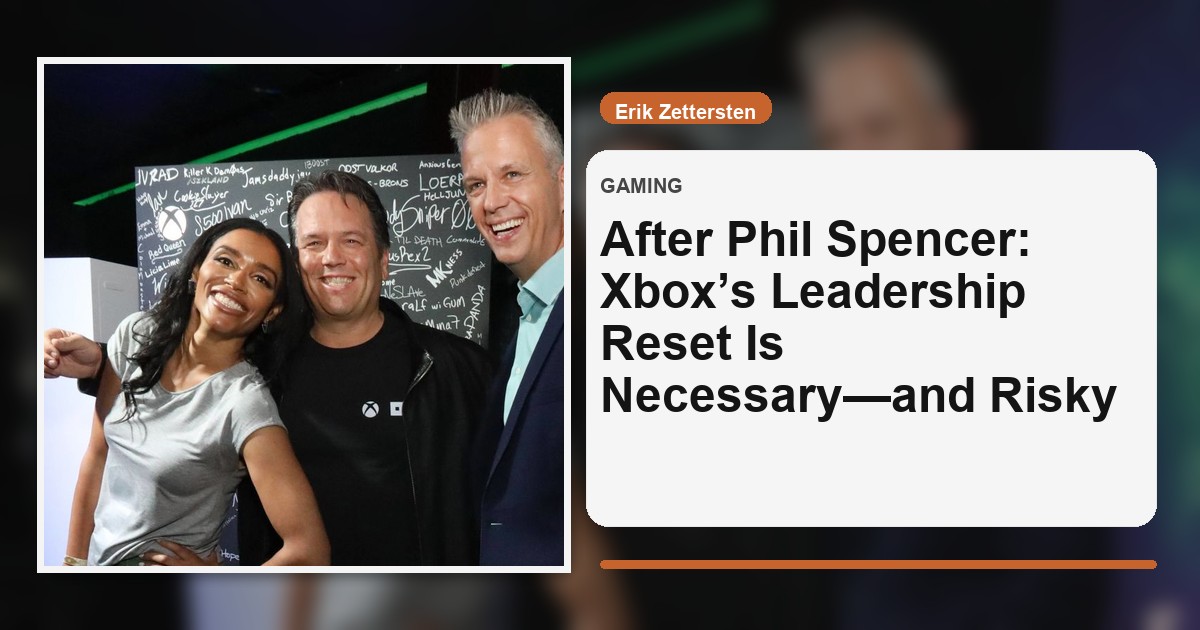
Phil Spencer retiring is the end of an era Xbox fans have argued about for years.
Some people are acting like this is an obvious upgrade. Others are treating it like a funeral. Both reactions are lazy. The honest take is messier: Phil leaves with real accomplishments, real scars, and a strategy that helped Xbox survive—but didn’t always help it feel like Xbox.

Start: Why fans are frustrated (and not wrong)
If you’ve spent the last few years unhappy with Xbox, you’re not imagining it.
The studio closures, the identity drift, and the constant “wait for next year” cadence wore people down. Fans weren’t asking for another strategy presentation. They wanted first-party consistency and clear reasons to own the box. Too often, they got corporate logic instead of emotional payoff.
Phil’s critics have a point: Xbox sometimes felt over-optimized for portfolio management and under-optimized for joyful, must-play hits.
Middle: The part critics understate—Phil’s actual wins
Now the uncomfortable part for anti-Phil narratives: he also kept Xbox alive and relevant during years when it could have become a legacy badge.
He pushed hard on backward compatibility when much of the industry treated old libraries as disposable. He turned Game Pass from a weird experiment into a strategic pillar. He backed accessibility in a way that moved beyond PR language. And he helped drive acquisitions that gave Xbox content scale it simply did not have before.
Those aren’t small moves. They changed the business.
Did all of that translate into a cleaner first-party era? No. But pretending he did nothing right is ahistorical.
The leadership handoff: good operators, thin gaming scar tissue
The incoming structure has real upside. Fresh leadership can clear political debt, reset decision velocity, and stop protecting failed assumptions.
But here’s the risk nobody should ignore: top leadership that is strong operationally but light on game culture can accidentally turn Xbox into a very efficient media pipeline instead of a great game company.
Gaming is not just content scheduling. It is taste, timing, and creative conviction under uncertainty. Leaders who haven’t lived that cycle can over-trust dashboards and under-trust developer intuition.
The industry norm I’m tired of: “engagement strategy” over game identity
Every large platform now says the same thing: ecosystem, engagement, retention, cross-device reach.
Fine. Those are real business levers. But if that language becomes your worldview, your games start feeling designed by strategy docs. Players can smell that immediately.
Xbox does not need better monetization vocabulary. It needs clearer creative identity. If new leadership can’t answer “what should an Xbox game feel like?” in one sharp paragraph, no amount of platform distribution will save them.
Where I’m uncertain
I’m concerned, but I’m not cynical.
The new team could surprise everyone by pairing operational discipline with a developer-first culture. That combination would be dangerous—in a good way. A cleaner org plus better release discipline could produce the most stable Xbox slate in a decade.
But uncertainty is real. Transition periods often look coherent from the outside while internal priorities quietly conflict for 12–18 months.
A concrete alternative to drift
If I were setting the first 18 months of this new era, I’d force five commitments:
- Two flagship franchises with non-negotiable quality bars (no schedule theater).
- A “no surprise closures” trust policy for acquired studios within a defined window.
- One public first-party roadmap update cadence with honest slip language.
- Creative leadership seats with shipping game experience at the top table.
- Game Pass growth measured alongside player sentiment, not instead of it.
This is not complicated. It’s just disciplined.
Personal take
I’ve defended Phil in rooms where people wanted a villain and criticized him in rooms where people wanted a saint.
Both reactions miss the point. Leadership in games is mostly tradeoffs you get blamed for later. Phil made some great ones and some costly ones. That’s reality, not contradiction.
My concern for what comes next is simple: if Xbox becomes “smart” but less soulful, it will lose the exact people who stuck around through the hard years.
My hope is just as simple: this reset could finally align strategy with great games instead of asking fans to choose between them.
That would be a real legacy move—whether Phil is in the chair or not.
Fact-check context: demand is real, trust is fragile
Gaming demand remains healthy by almost any macro signal. Steam concurrency records keep rising, and the PC ecosystem continues to post strong participation metrics. This is not an audience problem.
But hardware and platform economics are volatile. JPR’s market summaries show a market that can grow overall while still creating pain in specific segments, which is exactly why player sentiment can sour even during headline growth.
In plain terms: people still want to play. They are just less tolerant of pricing games, thin content roadmaps, and strategy-first experiences that forget why players showed up in the first place.
References
- https://www.gamespot.com/articles/phil-spencer-leaving-xbox-as-microsoft-ai-boss-takes-over/1100-6538330/
- https://www.pcgamer.com/gaming-industry/xbox-boss-phil-spencer-is-retiring-and-his-replacement-is-an-ai-executive-who-joined-microsoft-in-2024/
- https://www.geekwire.com/2026/xbox-chief-phil-spencer-retiring-after-38-years-at-microsoft-asha-sharma-named-new-gaming-ceo/
- https://www.interactive.org/special_awards/details.asp?idSpecialAwards=43
- https://www.purexbox.com/news/2026/02/new-xbox-boss-makes-official-statement-as-she-takes-over-from-phil-spencer
- https://news.xbox.com/en-us/podcast/phil-spencer-xbox-games-showcase-interview-the-official-xbox-podcast/